
Gotham’s Oysters: The Indigenous Past to Today’s Billion Oyster Project
Sorry! This event has passed, visit our events calendar to look for other programs. Don’t miss another event – sign up for our eNewsletter!
Community Room, 3rd Floor
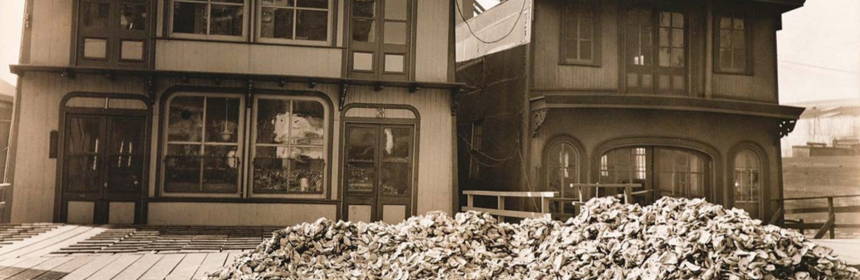
For almost the past 7,000 years, what is now New York harbor and the lower Hudson Valley held half the world’s oysters in massive reefs. Past Native Americans used oysters as food and tools, in ceramic making, and as exchange (wampum). Evidence for such activities can still be found throughout the Hudson River Valley. Oyster harvesting grew dramatically from 1700 to the early 20th century with New York being the oyster capital of the world. Small communities with oystermen developed. Sadly, by 1927 New York’s oysters faced near extinction due to industrialization, over harvesting, and pollution. Fortunately, attempts to reestablish viable oyster populations to the Hudson River estuary currently are underway. The non-profit Billion Oyster Project is restoring the ecosystem, aiming to reintroduce one billion oysters by 2035 to filter water, protect shorelines, reduce landfill accumulation, and enhance biodiversity.
Eugene Boesch is an archaeologist who has investigated Native American oyster middens and historic use of the bi-vale for close to 50 years. Charlotte Boesch manages Billion Oyster Project’s Shell Recycling Program, which collects discarded oyster shells from dozens of restaurants in NYC. This closed-loop initiative not only diverts shells from landfills but also reclaims a valuable resource to restore the once-historic oyster population to New York Harbor.
Ages 18+
The library’s policy on children states “children in fifth grade and under shall be accompanied in the building by a responsible adult who must remain with the children at all times.” In other words, children may not be left in the Youth Services area unattended while you attend this program. Thank you for your cooperation.